Darcy Blaze
c/o Hannah Courtoy Vault
Brompton Cemetery
London
To whom it may concern,
I was eighty years old when Joseph Bonomi and Samuel Warner caused my demise.
I should make clear that neither gentleman intended to.
Indeed, they were considerably more upset about it than I was.
But I am getting ahead of myself.
You must not be misled by my present situation. What follows is neither Dracula nor Frankenstein, but the true account of how I became the Voice from the Vault.
By then we had become Victorians.
I confess I never entirely took to it.
I had begun writing at fifteen in the Georgian age of George III, when Britain still understood deference, elegance, scandal and hypocrisy in their proper proportions.
Now there was an age worth writing about.
Men drank too much, gambled too much, fornicated too much and lied magnificently about all three.
Women were expected to smile, produce heirs, endure husbands, ignore mistresses and somehow remain responsible for public morality.
Naturally, they were far more interesting.
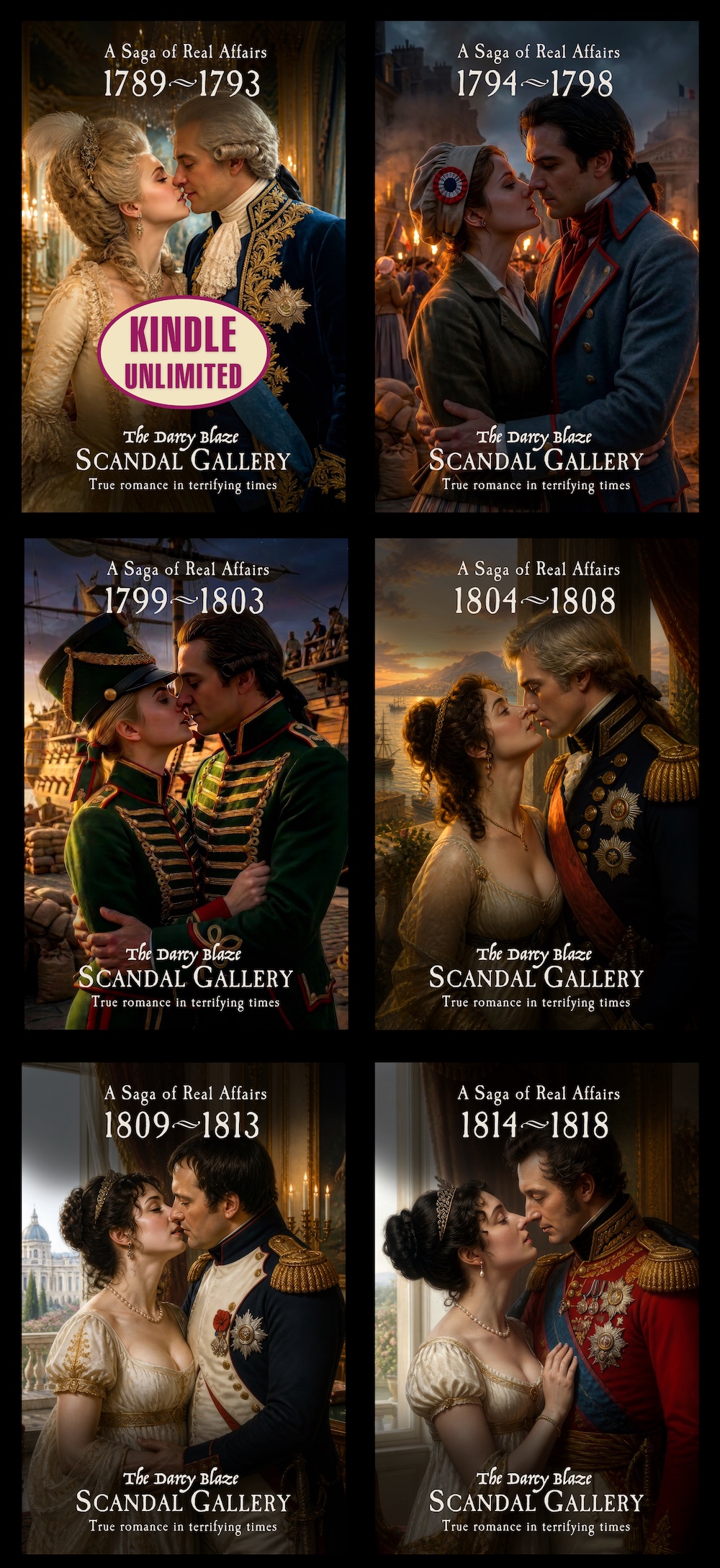
My Scandal Gallery pamphlets began with grave robbers, body snatchers, dubious undertakers and ladies conducting business in churchyards beneath lichen-covered angels.
Then came politicians, princes, duchesses, admirals, actresses, bankers and courtesans.
I soon discovered an eternal truth.
The public revels in scandal.
As do some of the scandalous.
By the Victorian age London had developed a pressing problem and opportunity.
Where to put its dead.
The old churchyards were overflowing, so great new cemeteries appeared around the capital.
Highgate, Kensal Green, Brompton and the rest.
They were not merely burial grounds. They became parks, promenades and, inevitably, competitions in stone.
Merchants wanted monuments fit for bankers.
Bankers wanted monuments fit for dukes.
The Victorians had discovered that death need not interrupt social ambition.
Naturally I wrote about it.
Undertakers, monumental masons and sculptors began advertising in the Scandal Gallery, which was how I first met Joseph Bonomi.
He arrived carrying a portfolio almost as large as himself.
“Mr Blaze?”
“Regrettably.”
“Joseph Bonomi.”
“I know. You are the Ancient Egyptian gentleman.”
“I am not Egyptian. Ancient, perhaps, is a matter of opinion.”
“And certainly not as ancient as me.”
He laughed.
That helped.
Bonomi had travelled extensively through Egypt, recording its monuments and studying its ancient designs. London, meanwhile, had become obsessed with everything Egyptian.
Sphinxes appeared in gardens.
Obelisks appeared on mantelpieces.
Men who could not have found Cairo on a map discussed the mysteries of the Nile after dinner.
Then Bonomi showed me his design for Hannah Courtoy.
“A mausoleum?” I asked.
“Egyptian.”
I studied the drawing.
“That is more than a tomb.”
I looked up at him.
“That is an announcement.”
Hannah had married well, inherited handsomely and had no intention of spending eternity beneath an ordinary headstone.
Her daughters, Elizabeth and Mary Ann, shared their mother's fascination with Egypt and the afterlife.
Where they differed was over the address.
“Highgate,” Hannah announced.
Elizabeth sighed.
“Mother.”
“I shall be buried at Highgate.”
“Brompton is nearer,” Mary Ann said.
“And cheaper,” Elizabeth added.
Hannah stared at them.
“Cheaper?”
“Considerably.”
“My dears, I have spent my entire life avoiding things described as economical.”
“Brompton is perfectly respectable.”
Hannah looked wounded.
“I was in my prime as a Georgian, I have never aspired to being merely respectable.”
I liked her immediately.
A year or two later Bonomi came to see me with a delicate request.
“The Courtoy mausoleum. I’d like you to see it.”
“At Highgate?”
“Brompton.”
“Brompton? Hannah will be furious.”
“Hannah is dead.”
It was true. She had died before Bonomi had laid a stone, and had spent the past five years waiting patiently in the Brompton Catacombs.
Her daughters inherited her fortune, the drawings and the account.
Despite Hannah’s wishes, practicality prevailed.
Bonomi was completing the same magnificent Egyptian design at Brompton for less money, where, standing almost alone, it would attract considerably more attention.
It was at this time that Bonomi introduced me to the man responsible for my present condition.
“Darcy, this is Samuel Warner.”
I looked at him.
“Oh, the creator of the invisible gun shell?”
Warner smiled.
“Indeed. I am the inventor.”
Warner's claims had been debated in Parliament for years. He spoke of invisible shells and secret weapons capable of destroying ships from great distances. Thousands had watched him destroy the old John o' Gaunt off Brighton.
Some thought him a genius.
Others a charlatan.
I had spent a lifetime around those seeking to profit from politicians’ ambitions and saw no reason he could not be both.
The Courtoy sisters meanwhile had become fascinated by séances, spiritualism and electricity.
Victorian England liked to think itself rational while spending its evenings asking dead relatives to knock on tables.
Elizabeth once asked me:
“Do you believe the dead can speak?”
“Certainly.”
“You do?”
“I have been writing about politicians for sixty years.”
Mary Ann laughed.
Elizabeth did not.
They had also been talking to Warner.
That worried me.
If electricity could travel invisibly, they reasoned, why not the soul?
This is precisely the sort of question one should never ask within hearing distance of an inventor with an eye to profit, particularly Warner.
He had proposed an apparatus incorporated into the mausoleum to convey their mother’s spirit safely into the Egyptian Field of Reeds.
“For a handsome fee.”
“Naturally.”
Now Bonomi and Warner invited me to inspect the nearly finished vault.
The mausoleum was magnificent.
Polished grey granite, severe and perfectly proportioned, with little more than the entwined initials of Hannah and her daughters upon the bronze door.
Had it stood beside the Nile, no traveller would have questioned it.
Inside, an Egyptian frieze ran beneath the ceiling.
A circular mirror was mounted inside a great brass cogwheel. Smaller cogs surrounded it. To one side stood a Leyden jar, incorporating a copper coil, connected to glass globes.
I stared at it.
“I have seen something very like this before.”
Warner became cautious.
“Where?”
“Doctor Graham's Temple of Health.”
Bonomi looked at Warner.
“The Celestial Bed,” I continued.
“Some of the electrical principles are similar,” Warner admitted.
I turned to him.
“Samuel, have you built a machine for sending dead women into eternity based upon a bed designed for electrical sexual stimulation?”
“No.”
A pause.
“Well, not entirely.”
Bonomi laughed.
Warner did not.
One trial remained.
They required someone discreet to test it.
Preferably someone interested in Egypt, séances and the hereafter.
They had apparently decided that described me.
“It is perfectly safe,” Warner assured me.
That sentence has never been one to be trusted.
Nevertheless, I was intrigued.
I was eighty.
Winter was upon me.
I had buried most of the people I loved and several I disliked.
Besides, if Warner’s contraption really could propel me to the warm banks of the Nile, there were worse places to spend eternity.
Warner moved behind the tomb, released the counterbalance and the door slid open.
“What do I do?”
Warner pointed towards the mirror.
“Go in, stare into it and concentrate upon the Field of Reeds.”
“Have you ever seen them?”
“No.”
“Then how shall I know when I arrive?”
Bonomi sighed.
“Darcy.”
“Yes?”
“Just go in and concentrate.”
I entered, stood upon the boards above the grave shaft and looked into the mirror.
An old man stared back.
I thought of the world in which I had grown up.
Somerset House.
The Royal Academy.
Devonshire House.
Paris.
The Georgian age.
My age.
Behind me the bronze door slid shut.
“Joseph?”
His voice came faintly through the keyhole.
“Don’t worry, Darcy. Just keep concentrating.”
That did not improve my confidence, but I had little choice.
Then came a click.
Another.
A low hum.
The cogs began turning.
The glass globes glowed.
My reflection reappeared.
Then it blinked.
I had not.
A pale mist began swirling around the mirror.
I tried to step back.
I could not move.
The glass seemed to deepen and beyond my reflection appeared points of light.
Stars.
Thousands of them.
The vapour filled my lungs.
I heard my heart beating.
Then I did not.
My reflection smiled.
I did not.
That was when I knew something had gone wrong.
The next thing I knew it was night and I was standing outside the mausoleum with Bonomi.
He didn’t acknowledge me.
I reached for the bronze door.
My hand passed straight through it.
“Oh.”
Alarmed, I pulled back.
The door slid open. Warner joined Bonomi and they both entered.
I followed.
Bonomi knelt beside my body.
Warner stood over him.
“Well?”
Bonomi felt my wrist.
“No pulse.”
“I should think not,” I said. “I am standing over here.”
They could not hear me.
That was irritating.
The following day they returned with shovels and buried my body beneath the mausoleum.
Hannah was later laid above me beneath the great stone slab, and in due course Elizabeth and Mary Ann joined her.
Thus I acquired three remarkably quiet neighbours.
For almost two centuries the Courtoy Mausoleum has been my home.
Although I have tried, I cannot travel backwards or forwards through time.
What I can do is observe.
I watched Victorian London change into the modern city.
Horses gave way to motor cars.
Gas to electricity.
Empires rose and fell.
Kings and prime ministers came and went.
The Georgian world became history.
My world.
And historians tidied it up.
They liked kings, battles, treaties and great men.
They were considerably less interested in who was sleeping with whom when the treaty was signed.
I considered this a serious deficiency.
Technology eventually improved my circumstances.
In the nineteen sixties, I found that if I turned the cogs, instead of travelling through time I somehow began picking up the radio.
The BBC.
Radio Luxembourg.
And, night after night, Horace Batchelor patiently spelling K-E-Y-N-S-H-A-M.
Whatever else may be said of death, I can spell Keynsham.
Then came television.
The internet.
And eventually the iPhone.
Now that was civilisation.
You may ask how a dead Georgian pamphleteer acquired an iPhone.
Dear reader, I have not had one.
I have had several.
People lose things in Brompton Cemetery.
If you lose your telephone here, the excellent Royal Parks Department are the people to contact.
I am not.
Although by then I may already have read your messages.
The internet has allowed me to revive the Scandal Gallery.
Not merely the wars, kings and battles, but the Georgian world as I remember it.
The beautiful dresses.
The elegant houses.
The affairs.
The money.
The corruption.
The whispered arrangements.
And above all the women who navigated a man's world and, more often than history admits, quietly changed it.
In other words, a world remarkably like yours today.
Only better dressed.
So now you know who I am.
If you wish to visit, take the District Line to West Brompton, turn right and I am next door.
Please do not shout “Hello, Darcy!” at the mausoleum.
The walls are granite and my neighbours are trying to rest.
I usually leave when the cemetery opens and return around closing.
If you encounter me around Somerset House, Hertford House, the British Museum, the V&A or Battersea Power Station, do say hello.
After more than two centuries observing mankind, I can assure you of one thing.
Regarding today’s madmen who believe they will dominate the world, we have been here before.
My stories will, I hope, enlighten and amaze you, because the scandals are real, the romances are real, and my own cast of players will take you inside them.
Where history has swept the scandal beneath the carpet, I shall lift it and show you the dirt.
And so the Scandal Gallery continues.
Only now I have the internet and charge my iPhone on London buses.
I see no reason death should stop me.
After all, it appears to have fallen rather out of fashion, bodies simply disposed of as efficiently as fast-food waste.
Darcy Blaze
Brompton Resident and free spirit